.and the power and strength of Britain was destroyed after him
I have made my book available to all now as a downloadable PDF. Enjoy the story of the Irish Arthur in all his glory, at the correct time in history and in all the right places!
The
great King Arthur,
defeater of Saxons,
Picts and Scots, conqueror of Britain, Ireland,
Scotland,
Denmark, Gaul and the Orkneysneeds no introduction being probably the most
famous ancient Briton of all time, but as we will be comparing his life with
that of certain Irishlegends a brief summary of what is known of
his life and their sources would be useful.
Arthurfirst appears through the mists of time in the
early ninth century work the Historia Brittonum(HB) – the History of the Britons- composed around 829AD.
This work was an accumulation of various sources bundled together and rewritten
to form a whole narrative history. The work incorporates material concerning a
chronology of ancient British events; material on Vortigern,
Ambrosius Aurelianus,
St.Germanus
and St.Patrick,
Arthur’s battles, Northern British events, the mirabliliaand Saxon genealogies.
In this work then, Arthur’s
twelve battlesare mentioned for the first time, where he is said to have defeated the Anglo
Saxonsand won every battle including the famous
battle of Badonhill. We also get a glimpse of the mythology
that has begun to surround him as he became associated with the landscape due
to the similarity of his name to various rock formations. Therefore, he is
associated with a Neolithic tomb in Ercing in Wales and to another stone
associated with a giant mythical dog of his called Cabal.
In the HB Arthuris merely called in Latin a dux bellorum or miles, the former meaning a ‘general or leader of battle’ and the
latter a ‘soldier’ or ‘mounted warrior’. From this, it has been deduced that he
may have been of lower rank than the kings of the Britonshe fought for, but this may not be the case.
Medieval scribes in copying ancient manuscripts often changed the title of Rex (king) to that of Dux (General) or Comes (Count) as they didn’t recognise the status of the petty
king. This was due to the time in which they wrote, not understanding that in
the fifth and sixth centuries the whole country would have been full of petty
kings and their kingdoms, with several kings occupying small areas that were
later amalgamated under one sovereignty. The poetic epithet of dux bellorum (leader of battles) itself
was a common enough one in Welsh poetry, suggesting, as many scholars have
done, that the Arthur battle list derived from a Welsh poem of the seventh or
eighth centuries. The HB was appended to over many years, with some more
information on Arthur included, such as glosses to the main work. These made
more of his Christian links and offered some puzzling comments concerning his
wayward youth. The Irishthen wrote their own vernacular version of the
HB in the mid eleventh century.
The next we hear of Arthuris in the tenth century poem The Gododdin[.
This poem concerning events of Britonsliving in what is now southern Scotlandaround Edinburgh compared one of their heroes
Gwawrddur to Arthur, implying that he was not as great as Arthur even though he
could kill 300 men.
This comparison is based on the battle list in the HB as Arthur was said to be able
to kill 960 men in one assault.
The poem also shows many more borrowings from the HB so can be dated in its
Arthurian form sometime after the HB became widely read. Therefore, for this
part a tenth century date seems appropriate even though the manuscript we have
now only dates from the thirteenth century. The poem refers to a battle that
took place in Scotland in
the late sixth century called Catraeth, which is mentioned in the Irishannals as having taken place in 596AD
against Saxonsincursions into far northern Britain.Also in the tenth century, we find Arthur
mentioned in the Welsh Annals as having fought at Badonin the year 516 and having died in 537 in
battle, at the same time as one Medraut(Mordred) but it is possible these are later
interpolations to the annals.
Arthurthen reappears next in possibly an early
eleventh century text called Vita
Goeznovius (circa 1016 but could be later) which has taken material from a
continental version of the HB, which detailed his twelve battles against the
Saxonsand then mentions for the first time his
conquest of Gaul and his kingship.
In around 1120 a Flemish cleric called
Lambert of St Omer, in a work entitled Liber
Floridus mentions a palace of Arthursituated in Pictland, “built with marvelous art and variety, in which the history of all his
exploits and wars are to be seen in sculpture”. These sculptures are most
likely those at the Pictish capital Forteviotas opposed to the medieval belief that Arthurs
Oven near the river Carron is meant. Soon after this in 1125, William of
Malmesbury in the Gesta Regum Anglorum
mentions Arthur where he says that Arthur was the subject of “fantastic tales told by the Bretons”.
This is then followed by the most famous or infamous work to mention Arthur,
the History of the Kings of Britain
written by Geoffrey of Monmouthin about 1139. This expands on the legends of
Arthur and Geoffrey uses him as a figurehead to appease the British and English
who had recently been conquered by the Normans
with Breton help. He does this by linking Arthur to Breton descent and
envisages the Bretons playing a major role in the conquest of the Saxonsas they did in helping the Normans of William
the Conqueror defeat Harold.
Also in this century are other works from
the Welsh such as Culhwch and Olwenand other fairy tales that mention Arthurfrom a group of works now called the Mabinogian.It was Geoffrey’s work though which was to inspire
the later romance tales of Arthur, including as it does mention of Merlinand Mordred and others that became linked with
Arthurian legend. It is in this work that Arthur was given a father ‘Uther’,
whose deeds are merely a mirror of Arthur’s. It is here we find his wife for
the first time, Guinevere,
his famous sword Caliburnus, later Excalibur, his extended battles against the
Saxons( in various places Geoffrey assumes they took
place) an expanded version of Arthur’s conquest of Gaul, southern Scotlandand Ireland,
his non death as he sails away to Avalon to heal his wounds and much more.
From here on in Geoffrey’s work found its
way to the continent and the French Romance writers picked up the story and
incorporated their own localised legends of Arthurmixed with Greek mythology to create a
chivalric Arthur and his knights, born to uphold late medieval moral values and
take part in the search for the Holy Grail. Other later writers then
incorporated the Round Table to accommodate Arthurs many knights in equal
sitting and the legend of Arthur was complete.
Arthurthen, after the death of Uther, as a lad of fifteen, was chosen to lead the
Britonsafter pulling a sword from a stone, signifying
his right to rule. He moved against the Saxons,
Irishand Pictsfighting twelve battles with the help of his
Breton allies culminating in the great battle of Badonwhere the Saxons were finally defeated and
peace brought to Britain.
He is given Excalibur from the Lady of the Lake
to help in his wars. He was then threatened by the king of Gaul
who called for the Britons to give tribute to the Romansas they had done in the past. This Arthur
refused and set out to conquer Gaul instead, as many Romano British emperors
had done in the past. He was successful in this and then married Guinevereand thought all was well but in a second
campaign to Gaul he left his foster son Mordred in control of Britain. Mordred wanted the crown
for himself so traitorously enrolled the help of the Saxons to usurp power. At
this Arthur returned from his campaigns and fought against Mordred, which
culminated in the great battle of Camlannin 537
where Arthur killed Mordred; but Arthur, mortally wounded, was carried off to
the isle of Avalon. Arthur was now said to sleep in a cave waiting to return to
save the Britons once more in their hour of need. Unfortunately, to stop this
idea that the Britons had for salvation from the Norman conquest, the Norman
King of Englanddecided to orchestrate the finding of ‘Arthurs’
bones buried under Glastonbury Tor, complete with fake inscription. Arthur was
now never to return but this did not stop his legends growing to even greater
heights over the centuries.
The biggest question for those seeking
Arthurnow is did he actually exist? From a scholarly
viewpoint the evidence is scant to say the least, his name
a puzzle to etymologists and contemporary evidence for his very existence is
missing. Many have sought to find the original Arthur on whom these legends have
grown but no one has been able to place their person in the right time frame.
Instead we have the Roman - Lucius Artorius Castusfrom the second century AD who actually fought
against the Britonsas a suggestion;
or Riothamusa fifth century British leader who fought in
470AD against the Goths in Gaul and lost;
or Artuir Mac Aedanan insignificant Arthur of Irishdescent who died in the late sixth or early
seventh century, as well as others such as Arthur Ap Pedr, again of the seventh
century.
What no one has been able to do is find
legends concerning an Arthurlike person that fits him into his correct
time frame of the late fifth to the mid sixth century; that has him fight the
Saxons,
Irishand Pictsand assume power over them all including the
Danesand the Orkneys.
That has him conquer the Gauls twice, has a wife Guinevere,
has him raised by a druid, has special weapons and is not initially a king of
the Britons.
Not only this, but no one has been able to link such a person to an historical
king living in the sixth century whose name could represent the name Arthur.
What this current work sets out to do is present exactly those requirements in
the form of annals and legends hidden for hundreds of years, some still awaiting
translation. This material is brand new to the subject of Arthuriana and has
never been presented before. This work therefore is an introduction to
Arthuriana of this fascinating and rather brutal character of Irish history, pseudo-history
and mythology. I will start first with an introduction to the character and to
the sources in which he appears. I will then discuss his name, family and
background and then move onto his battles. After this the main story of his
life and deeds will then be presented as a narrative work.
In this article I
will be exploring the terms Vennicni, Feni and Gwynedd in relation to
the early medieval tribes of Donegal, particularly the Cenel Conaill and examine the legend of the Ui Neills.
I will endeavour to show that the Vennicni were the forerunners of
the Feni who were in turn the Cenel Conaill of Donegal. In doing so I
hope to confirm the work of Brian Lacey who has suggested that the
Northern Ui Neill were a fabrication and that the Cenel Conaill and
Cenel Eoghan were always resident in the area from pre-history as
recent DNA findings may confirm. I invite comment to help me improve this article and increase my understanding of the etymology and DNA behind it.
Introduction
The people of Donegal
gave us our earliest medieval records of Ireland and Britain in the
form of the Iona Chronicle which concentrated its material on the
tribes of the Cenel Conaill, Cenel Eoghan, the Dal Riata and Picts of
Scotland. Extra material was added anachronistically to the chronicle
using sources such as Adamnan's seventh century vita of St.
Columcille who lived in the sixth century and king lists such as in
Baille Chuin of the seventh century. Adamnan himself was of the Cenel
Conaill as was Columcille.
The chronicle found it's
way to Ulster and other places by the mid eighth century where it was
continued and became various annals such as the Annals of Ulster,
Clonmacnoise, Tigernach and Innisfallon, the first of which became an
eventual source of the Welsh Annales Cambrai. Donegal in the early
medieval period would not have been called this, but had names such
as Fochla (the north), probably saint Patrick's woods of Foclut where
he became a slave for 7 years. Leth Cuin (Conns half) was another
term for the tribes of Fochla, supposed ancestors of the great Niall
of the Nine Hostages. Still later, by the ninth century the area was
called Ailech after the Cenel Eohgan had taken control and made the
Grianan of Ailech their base. The north of course would also have
encompassed much of Ulster.
The tribes of Donegal
then went onto conquer much of Ulster (Derry and Tyrone) and pushed
into Connaught and Meath claiming the over kingship of Ireland at
Tara. These tribes became known as the 'northern Ui Neill', a
fabrication born of their merging with the real Ui Neill of the South.
Charles Thomas Edwards and Brian Lacey have started the process of unraveling this pseudo-history with Lacey suggesting that the
'Ui Neill of the north' were possibly related to the other Cruithin
(Pictish) tribes of Ulster:
"However, it is
almost a certainty....that most of the so-called northern UiNeill did
not come into Donegal from outside at all, at least as recently as
the fifth century as is normally suggested. Rather, they probably
emerged instead from within the existing native people of that
territory. It's also very unlikely, despite the later widespread use
of the name UiNeill, that these people had any connection whatever
with the eponymous Niall Noigiallach. Instead it now seems clear that
at least most of them were later attached to the UiNeill by fictional
genealogical links - as it were, re-invented with fresh (false)
identities, as part of a newly constructed 'national' ruling
elite........could the Cenel Conaill and the Cenel Eoghan,therefore,
or either of these groups individually, have belonged to the Cruithin
themselves? “
Donegal in the early
medieval period would have been a country of woods, forests,
mountains and clearings, with most settlements being in the rich soil
of the river valleys and coastal lowland areas. The earliest mention
of the area comes from Ptolemy, writing in around 150CE who
designates this area as belonging to the Vennicni. Loch Foyle was
noted as the Vidoua. Next to them along the coast north eastwards
were the Robogdi and south-west of the Vennicni were the Nagnate and
Erdini or Erpedani.
The early tribes of
Ireland mentioned by Ptolemy must have been there a fair while for their names to have been noted by cartographers and travelers of these times. We do not really know where Ptolemy acquired his information
but the eastern tribes of Ireland appear to have been Celtic tribes
from Gaul and Britain which included the Menapi and Brigantes. The
western seaboard tribes appear to be predominantly indigenous as
their names and recent DNA studies show. At what point these Gallic
and British tribes made their migrations to Eastern Ireland is a
debatable question.
When Caesar arrived in
Britain in around 54BC there were many Gallic tribes already settled
in the coastal regions such as the Belgae and Parisi and Gallic kings
were said to have ruled both sides of the Channel. From this we could
then push back the arrival of Gallic tribes to Britain and Ireland to
100BC + and possibly 200BC with the spread of La Tene culture into
Britain and Ireland. I think all we can say is that there would have
been much coming and going between Gaul, Britain, Spain and Ireland
during the Iron Age of Northern Europe.
Did the Irish of the
eighth century CE have access to Ptolemy's map of Britain and
Ireland? There's a good chance they did as some of the names in the
Lebhor Gabala Érenn (The Book of the Taking of Ireland) are just too close to the names of Ptolemy's given
tribes. If they didn't then the power of their druids to relate
stories over hundreds of years must have been incredible.
DNA
I have mentioned the
recent DNA studies that have been undertaken in Ireland. Although
these studies are still in their infancy we can come to some general
conclusions but I would like to add that this area is still fraught
with difficulties so I can only give generalities. Scientists
are able to identify a particular genetic pattern in the Y chromosome
of the Irish - a genetic marker known as haplogroup R1b. This was
found not only in a high percentage of Irish men but also in most of
the population of Western Europe who have carried this gene for over 3000 years. Over time Haplogroup R1b was diluted by intermixing
with other populations and is now found in relatively fewer people
throughout Europe. In Ireland 85% of men have this marker and in
western Ireland, especially Connaught 98% of the population carry
this gene, which is a subgroup of R1b called R1b-M269.
This
means the peoples of western Ireland have remained genetically
isolated from the intermixing of populations that occurred throughout
the rest of Europe. In effect these peoples have been in Ireland since the late bronze age, when they first crossed
over from Britain, without any significant dilution. So the ancient
tribes of Ireland were of the same stock as the Bronze age peoples of Britain. They were all 'Pretani' in the eyes of Diodorus
Siculus who wrote in around 50BC... “those of the Pretani who
inhabit the country called Iris”. Caesar also knew of Britain and
Ireland as the 'Prettanic Isles'. It was his innovation to call us
Britanni.
In the UK about 70% carry the R1b marker and within this are subgroups that indicate origins for various peoples. R1b-S145 appears to be the DNA of the ancient Britons themselves, the Pretani making up about 25%. R1b-S21 are the Germanics making up another 15%. Hunter Gatherer's - R1b-S116 make up 9%, Picts come in at 5% - R1b-S530 and Irish at around 8% with R1b-M222.
The above subgroup R1b-M222 (a subclade of M269, R-P312) is prevalent in Ireland and Britain. This was at first
thought to represent the Ui Neills of Ireland and hence all the
descendants of Niall of the Nine Hostages. However DNA testing has
shown that although it is fairly common among those
with some Ui Neill surnames, such as O'Doherty, it is not common
amongst most of the Ui Neills themselves with only 20%
of men in Donegal having this gene. It is in fact more prevalent in
Ulster, Mayo, northern Britain and Scotland (excluding Argyll). This suggests that these peoples had common ancestors thousands of
years ago before Niall was even a twinkle in his mothers eye and that
the Ui Neills of the North were nothing of the sort! The Ui Neill gene might be R1b-S668 but it's still too early to tell as these may be Cenel Conaill.
Feni
and Vennicni
Now let us return to the Feni and Vennicni of Donegal. The etymology
of Feni is now established since Eric Hamp's study in 1992 entitled
Goídil, Féni, Gŵynedd in the Proceedings of the Harvard
Celtic Colloquium, Vol. 12. Koch agreed with his findings in hispaperCelts, Britons, and Gaels—Names, Peoples, and Identities (2000) andCeltic Culture: A Historical Encyclopedia of 2006. Hamp proposed
that Feni reflects the absorption of *d before *n in early Celtic
which allows the construction of Feni as *wēniῑ: *ueid(h)-n-ioi (wednioi). He came to the conclusion that the
name Gwynedd was related as the earlier forms were Gwinet and
Venedotia from *Ueneda. Gwynedd meaning a 'collectivity of
trees/forest'. He also linked the Welsh 'Goidel' (*ueid(h)eloi) as a
related term meaning 'the feni who lived in the forests'. Also the
Fiana (*ueidh-n-a) a 'group belonging to the woods and forests'. Feni
then means 'the tribe that inhabit the woods and forests', this
becoming the 'hunters of the woods and forests' and hence those
hunters, skilled with spear and bow became the warrior class of the
Feni and Fiana, the old Irish word 'feinnid' 'hunter, warrior'
summing it up nicely.
Both Hamp and Koch ignore
some other tribes apart from Gwynedd that carry the same root. The
Veneti of Armorica and Venedi and Feni of the Baltic regions
mentioned by Tacitus. The first two of these appear to be directly
linked, with the last, the Feni of the northern Baltic doubtful.
Also ignored are the Vennicni of Donegal and Venicones of Fife. Ptolemy's version 'Ouennicni' –
Vennicni reflects a perfectly natural early spelling of the name in
the orthography of the time which continued for hundreds of years. Our task is to tie in the Vennicni with the Feni,
why? Because the Feni are directly linked with the Cenel Conaill and
if Lacey is correct this people have lived in the region for
thousands of years.
The Feni or Fir Feni –
were, according to Irish texts of the eighth century onwards, quite
distinct from those of the Ulaid (Ulster -the Cruithne/Picts) and
those who were Laighin (Leinster – Britons and Gallic tribes):
“Batur
tri primcinela in Eri.: Feini ocus Ulaidh ocus Laighin (Gaileoin)”
-the three principle peoples of Ireland – the Feni, Ulaid and
Laighin.
In
this sense Feni may here represent all of the Irish tribes apart from
those of Ulster and Leinster, ie the tribes of Connaught, Donegal,
Meath and possibly Munster. Indeed in some cases Feni did later come
to mean 'the men of Ireland'. However other writings do link the
Connachta with the Feni and in
two quatrains on the battle of Ballyshannon between the Ui Neill and
the Leinstermen, 'the men of Leth Cuinn' mustered by Aed, king of
Ailech are referred to as 'Fir Feni'. 'Leth Cuinn'- 'Conns half',
was another name for the tribes of Cenel Conail and Donegal. Koch put's it like this : "In this formulation it seems that Feni means the peoples, whose rulers were reckoned in the genealogies as Sil Cuin (descendants of the legendary Conn Cetchathach). The rulers of Connaught and the pre-eminent Ui Neill dynasties were thus included."
This
attempt to separate the peoples of Ireland may contain a kernel of truth.
To
tie in the Vennicni, who in the second century CE were living in
exactly the same place that the Feni Cenel Conaill were in sixth
century we need some evidence. That evidence comes in the form of the
name of the river where the Cenel Conail lived, the river Finn. The
river Finn empties into the Foyle on its way to the sea and it's
valleys were home to the Cenel Conaill. It's seventh century form
reported by Adamnan in his Vita of Saint Columcille was 'Fenda' which
betrays it's earlier form 'Veneda' which is the same root as
Feni/Gwyned (Oueneda) as described above, essentially 'the river of
the forest'. So we now know that the initial 'Venni' of Ptolemy's
Vennicni represents *wēniῑ. The termination 'ni' appears to derive from the collective ending '-inion', later as 'ni/ne'. The 'c/g' becoming silent.With this we can do away with
any semantic relationship with the Pictish 'Venicones' of Scotland
although the first part may be another form of Feni or it may
represent, or was represented as 'cenn' or 'pen' – 'head' as these Picts were later
remembered in Arthurian myth as 'Dog Heads; 'cones' being interpreted as 'cun' - dog. Interestingly Irish myth also has the Irish Arthur - Mac Erca fight 'dog heads' as well.
We
need not posit that any of these Veneti tribes were related (except perhaps on an ancient DNA level), merely
that they used a common language that spanned the aboriginal areas of
Britain, Ireland and Europe. Those of Gwynedd though do appear to have been Irish
interlopers. The Ordovices had been the tribe of that area in Roman
times and Welsh myth relates that Cunedda and his sons came from the
north to remove the Irish (Feni) of Gwynedd.
Loch
Foyle and the river Foyle named by Ptolemy as 'Vidoua' provides the final piece of evidence. Hamp stated at the end of his work that it
was 'gratifying to find a noun *Uidh-u – 'Woods'' which of course
is directly 'Vidu'. So Ptolemy's 'Vidoua' (Ouidoua) is the river Finn
and may be evidence of Hamp's noun. Vidoua then appears to represent
the Q Celtic? 'vidh' with a termination 'oua' possibly meaning 'river'
via Celtic 'abona' (abhainn,
abhann, aibhneacha
/aunʲ, aun̪ˠ, ˈavʲnʲəxə/ "river"). So the River
was originally called the Vidoua at its mouth, inland the Veneda, then it gave its name to
the people living alongside it (the Feni), then the river name changed in time to Fenda, Finne, Finny
and eventually Finn. The modern rendering of 'Loch Febhail' appears
to be related to Proto-Celtic *WEWLO-, 'lips, mouth', which gives gwefl in Welsh (Pat McKay,A Dictionary of Ulster Place-Names, pp. 99-100).
So
we are left with a fascinating proposition - the Vennicni were the
Feni – 'the hunter tribe of the forest'. Lacey and the DNA studies
are correct, the Cenel Conaill have always lived there. There was no
'Ui Neill' movement north into Donegal except in later times by the
Cenel Cairpre briefly. The aggression was always southwards by the
Cenel Conaill and the Cenel Eoghan their cousins. The Cenel Eoghan however may have been of the Airthir of the Airghialla and it may be their movement against the Cenel Conaill which is remembered (see below).
The UI' Neill
So were the Cenel Conaill and Cenel Eoghan Ui Neill? One of the earliest mentions (apart from the annals at 621) of the Ui Neills is in Ambra Coluimb Cille, a poem possibly of the early seventh century which describes some of Columcille's ancestors. In this he is described as a "purebred descendant of Conall" which must indicate Columncilles fathers side and if Niall was involved he would surely have linked to him instead. The Conall here is Conall Gulban, supposed son of Niall.
Columcille is also described as a 'son of Conns offspring' presumably relating to Conn Cetcathach an ancestor of Niall. If as suggested, Conall Gulban was a fabricated addition to
Niall's ancestors, the descendent of Niall must have been on Columcille's
mothers side. His mother was Eithne who is said to be a descendent of
the Cenel Cairpre and this may be where the Niall ancestor lies as Cairpre was a son of Niall. Lacey has pointed out that some of these references in Ambra to Niall were actually missing in the 17th century manuscript and that it was later glosses that filled in the missing parts, making this document suspect for proof of connections to Niall in the early seventh century. Lacey (2004):
"However, Fergus Kelly pointed out that 'the only complete version [of the poem] is found at pp. 107-114 of G50, a 17th century manuscript in the National Library of Ireland'. Kelly advocated a seventh century 'date of composition' but adds that the glosses, on which some of the significant reconstructions of the missing sections depend, 'are in Middle Irish'. Crucially in the manuscript, all of line 9d is missing except for the word 'Neill'. The phrase, 'molfas colum ua neil, comes from the later glosses..."
Also in the seventh century was Tirechans Collectanea. He is most interested in the southern Ui Neills as indicated by Catherine Swift (1991)
" Unlike the branches of the Ui Neill so far discussed, however, the Cenel Conaill of Donegal appear to stand outside Tirechan's immediate concerns.They are neither blessed, as in the case of Conall Cremthainne, nor acknowledged as supreme ruler, as in the case of Loiguire, nor condemned, as in the cases of Coirpre and Fiachu's descendants."
For Tirechan writing in the mid seventh century, the four sons of Niall were "Conallum filium Neill, Coirpriticus filius Neill, Loiguire filius Neill and Fechach filii Neill". (Conall, Coirpre, Loagaire and Fiacha), There is no mention of Conal Gulban or Eoghan. Lacey has suggested that Conal Gulban was a later fabricated genealogical link to Niall. The Conall above of course is Conall Cremthainne, who in Terechan's eyes was the only ruler of a regnum (kingdom) in that time other than Benignus.
In the same work Tirechan however does mention the Cenel Conaill of Donegal. He mentions two kings (reges) of Donegal called Fergus and Fothad who granted the site of Raith Chungi in Mag Sereth to St Assicus of Ail Find. These two in later genealogy appear to have been conflated into the one figure of Fergus Cennfota son of Conal Gulban. Unfortunately Tirechan does not link any of these "filiorum Conill" as decendents of Niall. It's as though the 'sons of Conill' are a separate group to the 'sons of Niall'.
In Muirchu's seventh century life of Saint Patrick the Ui Neills are also
mentioned, with Niall being described as "the one from whom was
descended the royal stock of almost the whole Island" with Loagaire
again being paramount and described as 'emperor of the barbarians'.
The next person to mention the Cenel Conaill is of course Adamnan, writing slightly later in around the late seventh century. Adamnan himself, as well as Columcille were of the Cenel Conaill and so if he was linked in any way with the Ui Neill we would expect him to mention it. He puts words into Columcille's mouth that states he is a descendent of Niall where he mentions Abbot Comgall (founder and first abbot of Bangor in the Ards of
Ulster), - "Nellis Nepotes et Cruthini populi" - " a descendent of Niall and the people of the Cruithni" in relation to Columcilles ancestors and Comgall's who were going to war with each other. As we have seen, Conall Gulban was most likely a fabricated addition to Niall's ancestors, so the descendent of Niall must have been on his mothers side as mentioned above.
The inescapable truth is as Lacey suggests, the sons of Conall, who had always lived in Donegal since ancient times were later linked to Niall with the Cenel Eoghan to legitimise their anachronistic claims to the kingship of Tara. The reason for engineering this legitimacy was that the southern Ui Neill dynasties had ruled Tara in the fifth and sixth centuries with interlopers probably from the Ulster and British tribes (Coroticus being an example). That meant making Conall Gulban, another son of Niall.
Lawrence Maney is also unraveling this pseudo-history of the early Ui Neills and sums up the early legends at the end of his work - Rethinking the Political Narrative of medieval Ireland - The Hagiographer as Witness (1995), - like this:
"Indeed,
the generic 'Ui Neill' which we have adopted as the basis for our
narrative of the sixth, seventh, and eighth-centuries did not exist
as we have come to envision them at that early stage in their
development, no matter how clamorous the cry of the historical
sources they have left for us, sources often as fabulous as the most
far fetched miracle story to be found in the Hiberno-Latin
hagiography of the same period."
You may have noticed that I have ignored the Cenel Eoghan in most of this debate; the reason being that they were not at all linked with Niall until they came to prominence in the second half of the eighth century having defeated the Cenel Conaill at which point they made Eoghan a son of Niall.
Were the Cenel Conaill Cruithne? That's a difficult one to answer. The Cruithne, according to Lacey had inhabited some areas of Donegal north of the river Finn in ancient times but the DNA and the evidence above suggests that the Cenel Conaill were an indigenous people. That's not to say that some mixing with the Cruithne populations did not eventually occur which would be normal in dynastic development.
More likely is that the Cenel Eoghan were of the Airthir of Ulster (or merged with them) who appear to have been descendents of Romano Britons from fourth century Wales. Their genealogies are very similar with a Muiredach, mac Eoghan, mac Niallain (mac Fiecc) being easily transposed to Niall by making Eoghan a son of Niall when the Southern Ui Neill merged with tribes of the north. Mac Erca then, the Irish Arthur of the early sixth century, may have been of the 'Airthir', a name conveniently rendered as 'Arthur' in Brythonic / Welsh. The Airthir were a tribe or sept of the Airghialla. David Dumville comes to a similar conclusion himself in Saint Patrick AD 493-1993 (p.151) stating :
" ..Before the end of the seventh century we can see one of them, the Airthir, explicitly associated with the Ui Neill*: Armagh and Navan lay in the territory of the Airthir, and it is significant that we can see the church of Armagh adjusting it's stance towards the Ui Neill kings of Ulster in the second half of seventh century"
* Dumville quotes Muirchu : " bellum...inter nepotes Neill et Orientales ex una parte " We can see here the Airthir are called 'Easterners'. Dumville suggests the Arghialla had always been Ulster tribes and the story of the Three Collas should be treated with great suspicion, but modern DNA finding may indicate that the Arghialla did indeed come from the east, namely Britain at some early stage, possibly fourth century and integrate northwards conquering Ulster. I think they may have been three columns of Christian (hence Colla Chri) Romano British soldiers from the Roman garrisons in Wales who fled the Christian persecutions of the early fourth century. Hiring themselves out to kings in Ireland. By the sixth century, Dumville would be correct, they would in effect be Ultonians after interbreeding with the local populations. The late post Ptolemy arrival of the Airghialla may also be indicated by the fact that their name is not of the old order as indicated by Eoin MacNiell who comments"The name seems to be of comparatively late formation, and cannot be classed with the old order of plural people-names..." The fourth century arrival of the Arghialla may also be supported by the fact that Latin loan words for the first time enter the Irish languageas noted by E.A Thompson in Gildas and The History of Britain (1979):
"A study of the Latin loan-words in Irish has suggested that they fall into two groups. The second of these groups began to be borrowed about the middle of the fifth century, so that the first group dates at latest from the middle of the fourth century.."
What about Niall himself, did he exist? Probably yes, but on a much smaller scale than the later myth indicates. His nine hostages were probably those of the Airghialla as that was the exact number of hostages they were said to have to provide.This could mean that the 'Niallain' mentioned above could have represented Niall as the demander of the hostages. In effect this ancestor of the Airthir could have been Niall but not genetically or tribally linked in any way, just adopted!
The name Niall - Nelli, Neill.
What of his name? Meaning 'cloud' from Goidelic 'nel' or 'champion' from Goidelic 'nual' as usually said? Unlikely. It appears to be related to a more indo-European meaning which would be natural as the DNA indicates a degree of isolation so we should expect a degree of ancient indo-European to survive. In Sanskrit 'nili / nila' means 'dark blue' and is pronounced 'nella' much the same as the name of descendents of Niall were known (Nellan). In support of this is an inscription on a standing stone in county Wicklow reading 'Maqi Nili', translated loosely to "Of the son of Neill/Niall". He was the 'blue man' - a warrior, decorated in blue woad, just like the ancient Britons and Picts. There may be some circumstantial evdience for this from the Lebhor Bretnach in a poem called Duan Eureannach regarding a mythical Nel:
"Nel was carried southwards to Egypt,
Hero of dark blue weapons,
The daughter of Forann was given
Unto him afterwards."
Niall was killed, according to tradition, on the shores of the English Channel in around 455 during the campaigns of the Roman general (and future emperor) Avitus to bring peace to the area.
References
Cenél Conaill and the Donegal Kingdoms, AD 500-800, Brian Lacey Four Courts Press 2006
Celtic Culture: An Historical Encyclopedia, John Koch, ABC-CLIO Ltd (15 Mar 2006)
, Francis John Byrne, Ériu, Vol. 22 (1971), pp. 128-166
, David O'Brien, Ériu, Vol. 11 (1932), pp. 182-183
, Eric P. Hamp, Proceedings of the Harvard Celtic Colloquium, Vol. 12 (1992), pp. 43-50
Celtic Ireland, R. A. S. Macaliste, The Irish Monthly, Vol.
47, No. 549 (Mar., 1919), pp. 134-141
Early Irish History and Mythology, T.
F. O'Rahilly, Dublin
Institute for Advanced Studies, 1946.
The Pretanic Background in
Britain and Ireland, Eoin MacNeil, The Journal of the Royal Society
of Antiquaries of Ireland, Seventh Series, Vol. 3, No. 1 (Jun.
30, 1933), pp. 1-28 Published by: Royal
Society of Antiquaries of Ireland.
,G. Eogan and F. J. Byrne, Proceedings of the Royal Irish Academy. Section C: Archaeology, Celtic Studies, History, Linguistics, Literature, Vol. 66 (1967/1968), pp. 299-400.
, Brian Lacey, The Journal of the Royal Society of Antiquaries of Ireland, Vol. 134 (2004), pp. 169-172
, Philip Rance, Britannia, Vol. 32 (2001), pp. 243-270
, Melville Richards,The Journal of the Royal Society of Antiquaries of Ireland, Vol. 90, No. 2 (1960), pp. 133-162
Ptolemy's Map of Ireland, Goddard H., The Journal of the Royal Society of Antiquaries of Ireland, Fifth Series, Vol. 4, No. 2(Jun., 1894), pp. 115-128, Published by: Royal Society of Antiquaries of Ireland.
Rethinking the Political Narrative of medieval Ireland - The Hagiographer as Witness, Laurence Maney, Proceedings of the Harvard Celtic Colloquium, Vol. 15 (1995), pp. 89-105.
TIRECHAN'S MOTIVES IN COMPILING THE COLLECTANEA: AN ALTERNATIVE INTERPRETATION, CATHERINE SWIFT, Departments of Medieval and Early Irish History,
University College, Dublin 1992.
The Earliest Irish Annals: Their First Contemporary Entries, and the Earliest Centres of Recording, A. P. SmythSource: Proceedings of the Royal Irish Academy, Vol. 72 (1972), pp. 1-48.
Temoria: Caput Scotorum?, Edel Bhreathnac, Ériu,
Vol. 47, (1996), pp. 67-88
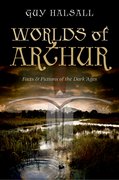
The story of King Arthur - and what we can ever know about him
Shows how all previous books on the 'real Arthur' can safely be ignored
Looks at all the 'worlds' of Arthur: the 'historical', the mythical, the fantastical - and the actual
Shows how the 'historical' Arthur is in many ways as dubious a figure as the 'red herrings' of the pseudo-historical fantasies
Reveals a truth about Arthur and his times both radically different and a good deal more intriguing than past accounts
King
Arthur is probably the most famous and certainly the most legendary
medieval king. From the early ninth century through the middle ages, to
the Arthurian romances of Victorian times, the tales of this legendary
figure have blossomed and multiplied. And in more recent times, there
has been a continuous stream of books claiming to have discovered the
'facts' about, or to unlock the secret or truth behind, the 'once and
future king'.
Broadly speaking, there are two Arthurs. On the one
hand is the traditional 'historical' Arthur, waging a doomed struggle
to save
Roman civilization against the relentless Anglo-Saxon tide during the
darkest years of the Dark Ages. On the other is the Arthur of myth and
legend - accompanied by a host of equally legendary people, places, and
stories: Lancelot, Guinevere, Galahad and Gawain, Merlin, Excalibur, the
Lady in the Lake, the Sword in the Stone, Camelot, the Round Table.
The
big problem with all this is that 'King Arthur' might well never have
existed. And if he did exist, it is next to impossible to say anything
at all about him. As this challenging new look at the Arthur legend
makes clear, all books claiming to reveal 'the truth' behind King Arthur
can safely be ignored. Not only the 'red herrings' in the abundant
pseudo-historical accounts, even the 'historical' Arthur is largely a
figment of the imagination: the evidence that we have - whether written
or archaeological - is simply incapable of telling us anything detailed
about the Britain in which he is supposed to have lived, fought, and
died. The truth, as Guy Halsall reveals in this fascinating
investigation, is both radically different - and also a good deal more
intriguing.
Readership: All those interested in Arthurian legend, the 'real' King Arthur, and the mysteries and history of the Dark Ages.
Author Information
Guy Halsall,
Professor of History, University of York
Guy
Halsall has taught at the universities of London and York, where he has
been a professor of history since 2003. His early specialism was in the
history and archaeology of the Merovingian period (c.450-c.750), and he
has since published widely on a broad range of subjects: death and
burial, age and gender, violence and warfare, barbarian migrations, and
humour. This investigation into the 'worlds of Arthur' brings him back
to the study of early medieval British history and archaeology with
which his scholarly training began.
Reviews
"Written by our leading authority on Early Medieval Warfare this
sweeping synthesis cuts through all the fantasy Arthuriana to the
chaotic reality of the tumultuous years after the end of Roman Britain.
With a fresh and incisive look at all the key sources, and a masterly
and imaginative use of the archaeological evidence, Guy Halsall offers
nothing less than a rethinking of what happened at the time of the
Anglo-Saxon migrations. Readable, authoritative, and witty, this is an
ambitious and wide ranging synthesis which will appeal to all who are
interested in the history behind one of the world's greatest collections
of myths and stories, vividly recreating the fractured world out of
which medieval Britain emerged. And while some may regret the loss of
the Hollywood Arthur, Halsall shows us that behind that image is a
reality which is no less fascinating." - Michael Wood, historian, broadcaster and author of In Search of the Dark Ages
Table of Contents
Preface
1: The Story of 'King Arthur'
2: The Matter of Arthur: the Traditional Narrative
3: Swords in the Stones: the Archaeology of Post-Imperial Britain
4: The Antimatter of Arthur: Reassessing the Written Sources
5: Continuity or Collapse? The End of Roman Britain
6: Beyond Brooches and Brochs: Rethinking Early Medieval British Archaeology
7: Red Herrings and Old Chestnuts
8: The Matter of Arthur: Changing the Framework
9: Rethinking the Anglo-Saxon Migration and Setttlement (1): When Did the Anglo-Saxons Come to Britain?
10: Rethinking the Anglo-Saxon Migration and Setttlement (2): The Nature and Scale of the Migration
11: Fifth and Sixth Century Politics in Britannia
12: The End of the 'World of Arthur'
Further Reading
Index

 Posts
Posts